



ASPIRE - Antimicrobial Stewardship, Prevention of Infection and Resistance in Africa
The ASPIRE Consortium is an African-European collaborative network dedicated to strengthening health systems through practice-oriented research in the field of antimicrobial resistance (AMR) and infection prevention in Ghana and Ethiopia. The network brings together expertise in clinical infectious diseases, health economics, and digital health technologies (eHealth) to develop innovative and sustainable solutions to key global health challenges. Through close collaboration among research institutions, healthcare facilities, and international partners, strategies to improve antibiotic stewardship, infection prevention, and quality of care are being implemented. ASPIRE is supported by a multidisciplinary international consortium with partners from Ghana, Ethiopia, Germany, Norway, and associated institutions in India.
A Continental Network of Partner Sites
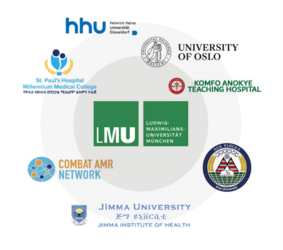
ASPIRE operates within a network of leading unversity hospitals and universities.
Participating study sites in Ethiopia include:
- Jimma University Medical Center (JUMC), Jimma
- St. Paul’s Hospital Millennium Medical College (SPHMMC), Addis Ababa
- Asella Teaching and Referral Hospital (ATRH) and the Faculty of Health Sciences at Arsi University
In Ghana, the Komfo Anokye Teaching Hospital (KATH) of Kwame Nkrumah University of Science and Technology (KNUST) serves as a key partner.
European institutions provide essential scientific and technical support:
- Heinrich Heine University Düsseldorf (HHU)
- Ludwig Maximilians University Munich (LMU), which leads financial coordination and project management
Additional support comes from the University of Oslo (UiO), building on long-standing collaborations that emerged through the COMBAT-AMR network, which has been working since 2017 to strengthen diagnostic capabilities, surveillance, quality control, molecular resistance analysis, and antibiotic management in African specialty hospitals.
Combating a Critical Global Health Threat
Antimicrobial resistance (AMR) is one of the greatest challenges facing global healthcare. Particularly in countries with a high burden of infection, resistant pathogens lead to infections that are difficult to treat, longer hospital stays, and increased treatment costs.
By combining research, clinical expertise, improved diagnostic methods, and sustainable capacity building, ASPIRE develops practical strategies to improve antibiotic stewardship, infection prevention, and patient safety in African healthcare systems.
The ASPIRE Study: A Two-Pronged Strategy

ASPIRE is funded by the European & Developing Countries Clinical Trials Partnership (EDCTP) and aims to strengthen the responsible use of antibiotics by integrating data on drug resistance, therapeutic drug monitoring (TDM), and improved infection prevention and control (IPC) measures.
Part (A) evaluates the impact of enhanced IPC measures on the incidence of nosocomial infections in four partner hospitals in Ethiopia and Ghana. Control clusters follow routine IPC procedures, while intervention clusters implement an enhanced IPC package to assess its effectiveness.
Part (B) focuses on severe bacterial infections by analyzing bacterial pathogens and their antibiotic resistance patterns. Patients undergo microbiological testing and receive empirical antibiotic therapy, supported by therapeutic drug monitoring to optimize dosing and improve treatment outcomes. Together, these approaches aim to improve antibiotic use and reduce the burden of antibiotic resistance.