




Mitochondrial Membrane Remodelling at nanoscale
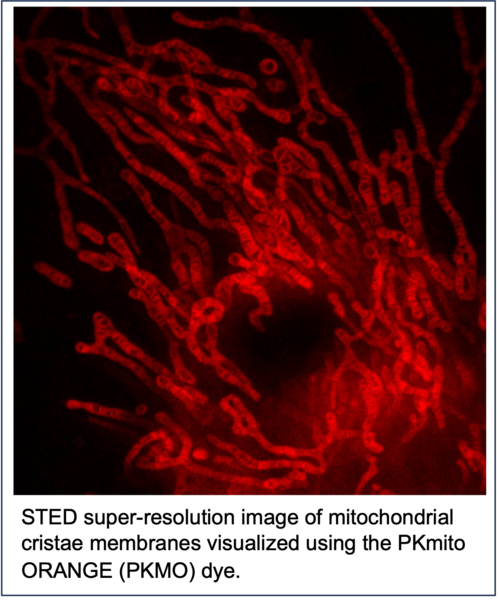
The aim of my research group is to uncover the molecular mechanisms regulating mitochondrial physiology and, in turn, cellular function.
We approach this with a unique perspective: we study mitochondria not only at the cellular level, but also at the level of individual organelles. If you are interested in understanding mitochondrial remodeling at the nanoscale, you have come to the right place!
Mitochondria are no longer viewed merely as energy-converting organelles. They are increasingly recognized as dynamic information-processing hubs that integrate metabolism, inflammation, and cellular homeostasis. In line with this evolving view, our research broadly focuses on the following areas:
1) Molecular mechanisms regulating cristae membrane dynamics
Electron microscopy and tomography studies revealed the intricate ultrastructure of mitochondria. However, because these approaches relied on fixed samples, cristae membranes were considered as static structures for over 60 years.
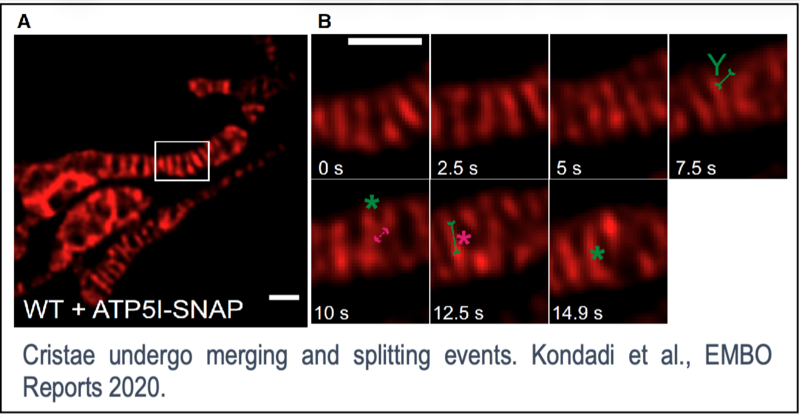
We have recently demonstrated that cristae membranes are highly dynamic, continuously moving within individual mitochondria. Cristae merge and split on a timescale of seconds. This discovery raises fundamental questions about how the internal mitochondrial architecture influences bioenergetics and metabolic function.
Our group investigates the physiological and metabolic cues that govern mitochondrial membrane remodeling and explores how structural dynamics relate to function. Importantly, abnormal cristae morphology is associated with diseases such as diabetes, cancer, and neurodegeneration. Our work aims to provide mechanistic insights into these pathophysiological processes.
2) Mitochondrial Retrograde Signalling
How mitochondria communicate with the nucleus remains poorly understood. It is now clear that perturbations in mitochondrial DNA and oxidative phosphorylation activate the integrated stress response (ISR). However, many upstream triggers and shared molecular mechanisms remain unidentified. A central question is whether common pathways regulate ISR activation and whether modulating these mechanisms can be harnessed to improve cellular function.
Approaches: To address the above research questions, we employ a combination of super-resolution techniques, variety of multi-omics and biochemical approaches, electron microscopy and genomics.
Open Positions: We are always interested in receiving applications from motivated students who want to pursue their PhD and Masters in the area of mitochondrial membrane remodelling. Please include a letter of motivation (Maximum one Page) and CV in the application.