

Clinical Data Intelligence for Hematology & Oncology - Projects
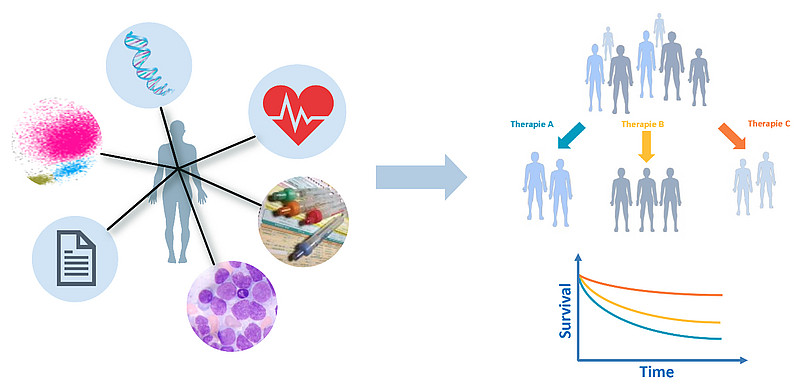
Our group is dedicated to establish the technical and methodological foundations required for the use of clinical routine data in research. We develop and operate software systems, data pipelines, and analytical tools that enable the structured, high-quality, and legally compliant use of clinical information derived from everyday patient care for precision medicine.
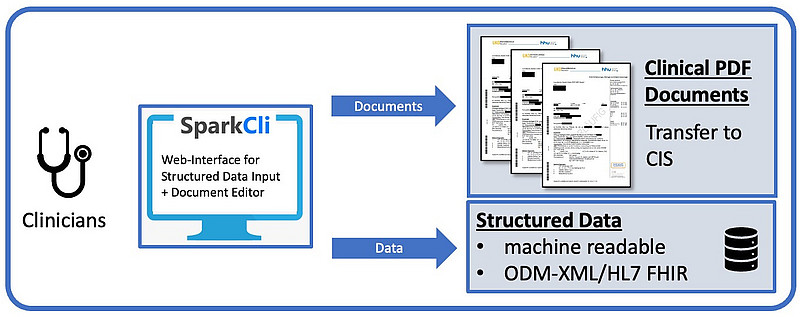
The first step towards more accessible data lies in the development of software applications and ETL (Extract, Transform, Load) processes that facilitate the standardized collection and transformation of routine data into research-ready formats. We created a central documentation platform called SparkCli which allows clinicians to record data in a structured manner. This approach increases documentation efficiency, streamlines data flows from clinical to research use, reduces redundant data collection, and ensures the availability of high-quality data for downstream analysis.
Building on this infrastructure, we design and validate artificial intelligence models that support clinical decision-making. In one of our projects, we developed a model for patients with myelodysplastic syndromes (MDS) that integrates longitudinal laboratory data with diagnostic information to predict individualized one-year mortality risk dynamically over time. Validations on external cohorts from our cooperation partners show the robustness and performance of the method while also retaining a high degree of interpretability. This example illustrates how the intelligent use of routine data can provide clinicians with valuable insights to guide patient management.
In addition to classical machine learning approaches, we increasingly employ large language models (LLMs) to, for example, extract structured information from unstructured clinical documents. This technology enables the efficient utilization of retrospective and external data sources, thereby expanding the available data basis for clinical and translational research.
Through these combined efforts, we contribute to the digital transformation of hematology and oncology by creating sustainable infrastructures, innovative analytical methods, and AI-driven applications that support precision medicine and improve patient outcomes.