



HIV and Opportunistic Infections
HIV/AIDS continues to pose a significant public health challenge in Ethiopia. In addition to HIV infection itself, opportunistic diseases such as tuberculosis, intestinal parasites, and other infections contribute significantly to the disease burden and complicate clinical care.
The GHIDA is investigating the epidemiology and impact of HIV-associated co-infections, as well as factors that influence the quality and continuity of HIV and tuberculosis care. A particular focus is on examining the impact of the COVID-19 pandemic on existing care structures, as well as on improving treatment monitoring, including the early detection of treatment failure and HIV drug resistance.
For clinical research and care, GHIDA works closely with the HIV outpatient clinic at Düsseldorf University Hospital, which cares for a large number of people living with HIV. This collaboration facilitates the exchange of clinical expertise, supports the optimization of antiretroviral therapy (cART), and strengthens the development of sustainable care strategies in Ethiopia.
GHIDA’s research activities in the field of HIV/AIDS are supported to a substantial extent by the Heinz Ansmann Foundation for AIDS Research. This funding makes an important contribution to the implementation and further development of our research projects.
REVIVE - Reducing Mortality in Adults With Advanced HIV Disease
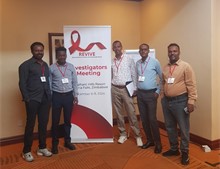
REVIVE is an international multicenter study evaluating azithromycin prophylaxis to reduce mortality in people with advanced HIV disease and a CD4 cell count of 100 cells/mm³ or less (www.phri.ca/research/revive/). The study, which began in 2023, aims to enroll 8,000 participants across more than 150 centers, including Asella, Ethiopia.
Azithromycin, administered in combination with antiretroviral therapy over a 4-week period, will be compared with a corresponding placebo and administered in the context of standard care for advanced HIV disease in accordance with relevant local guidelines.
The primary endpoint is all-cause mortality 24 weeks after randomization, and the secondary endpoints are all-cause mortality at 12 weeks, hospitalizations at 24 weeks, and the composite endpoint of hospitalizations and all-cause mortality at 24 weeks. Additional endpoints of interest will be investigated in substudies, including cause of death, transmission of antimicrobial-resistant pathogens, and the cost-effectiveness of azithromycin.
HIBISCUS
“HIBISCUS” is the acronym for the study “A Novel Diagnostic Approach for Opportunistic Infections in People with Advanced HIV Disease in Ethiopia.” The study was initiated by researchers at the GHIDA and the University of Minnesota, building on a previously co-published paper.
The underlying hypothesis is that screening for opportunistic infections (OIs)—including cryptococcosis, tuberculosis, and histoplasmosis—regardless of CD4 cell count, will identify at least as many, and possibly even more, HIV-associated opportunistic infections in hospitalized patients as the current CD4-based screening approach. The study was approved by the relevant ethics committees and implemented at Adama Hospital Medical College and Asella Referral and Teaching Hospital.