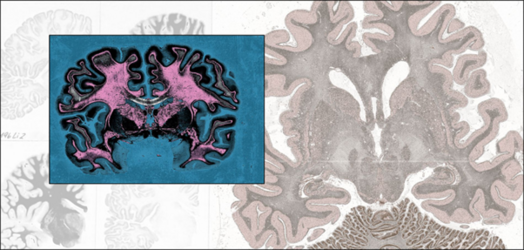


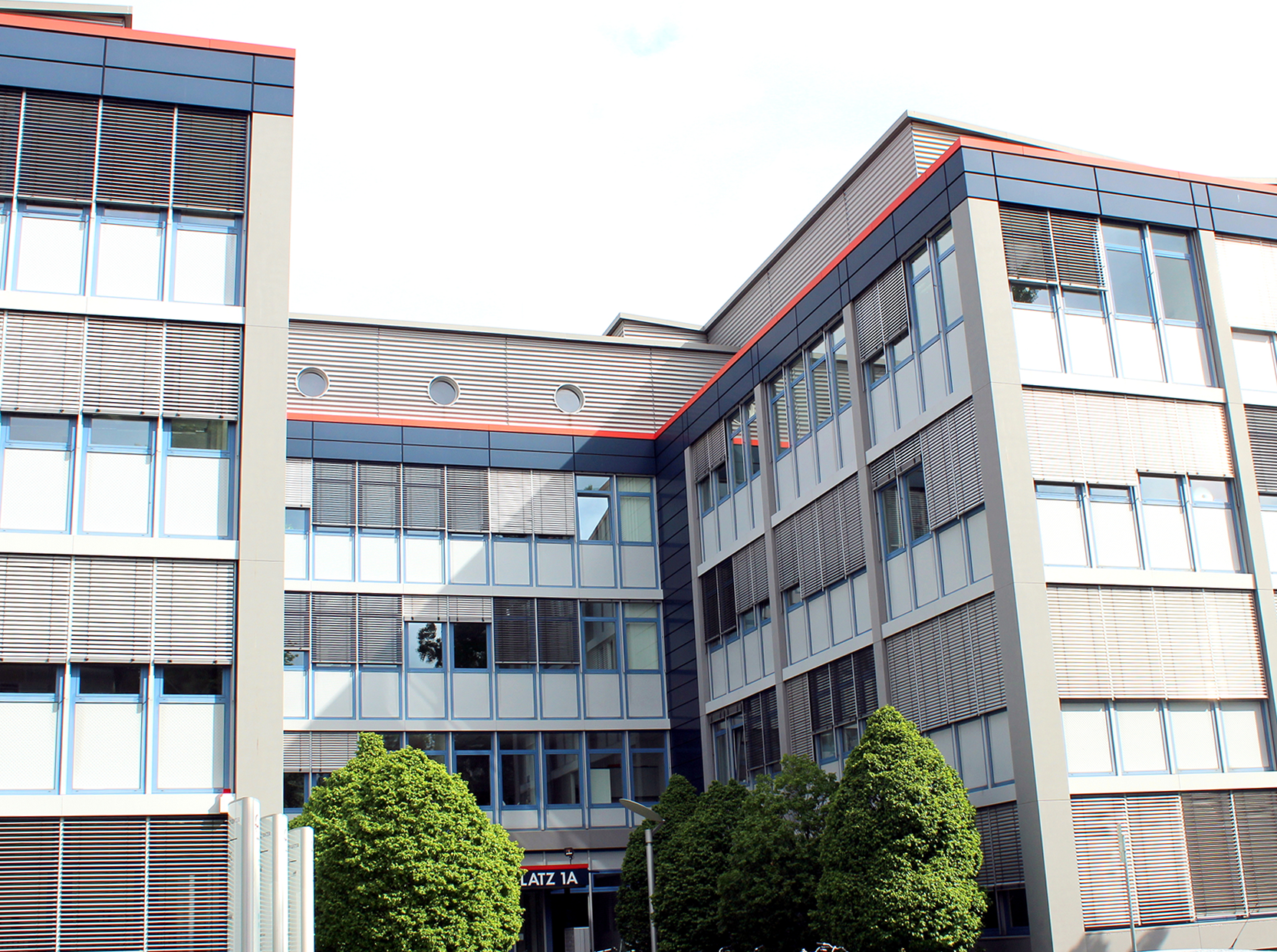




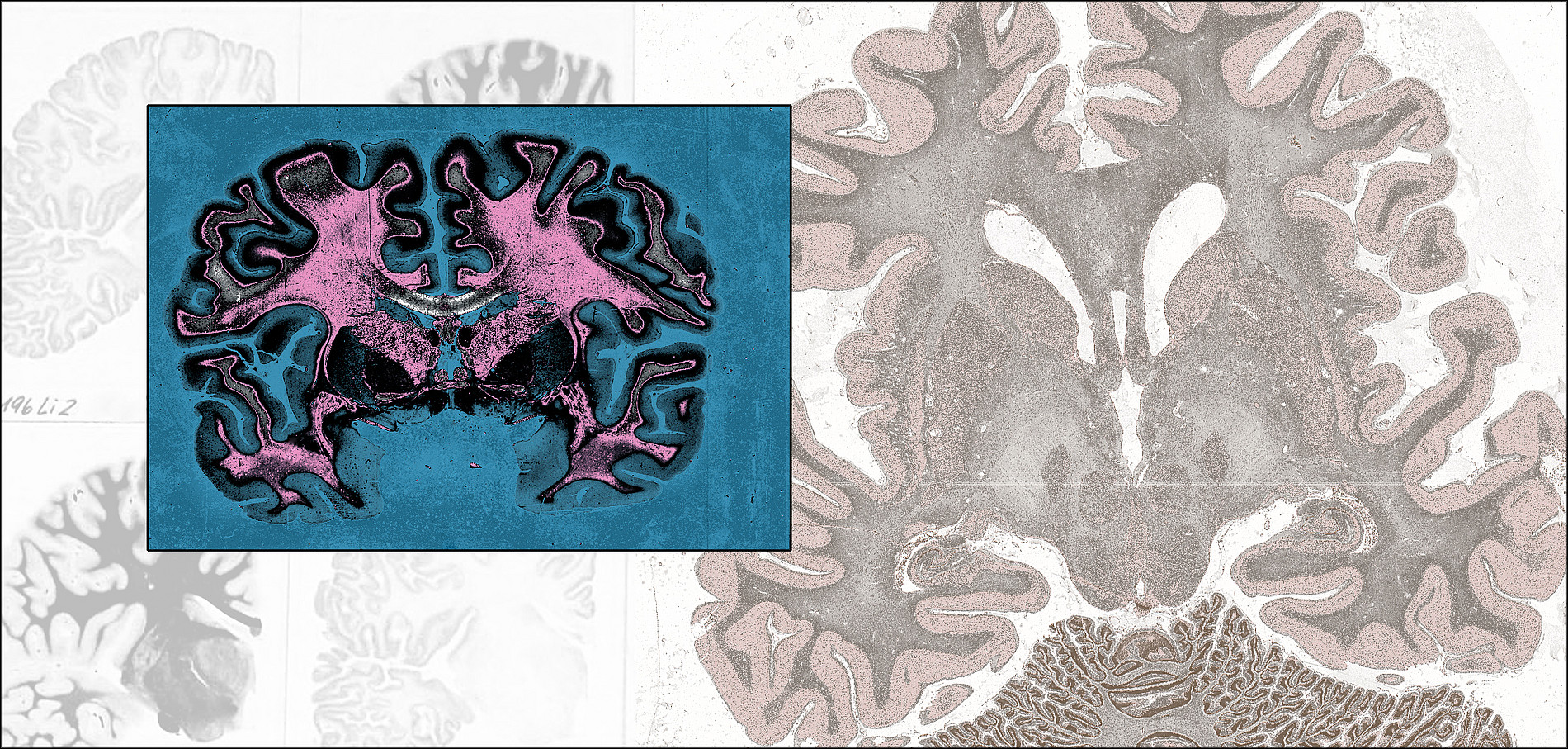
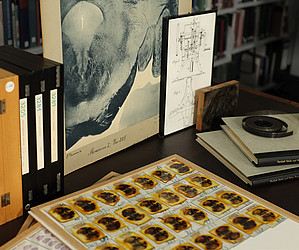
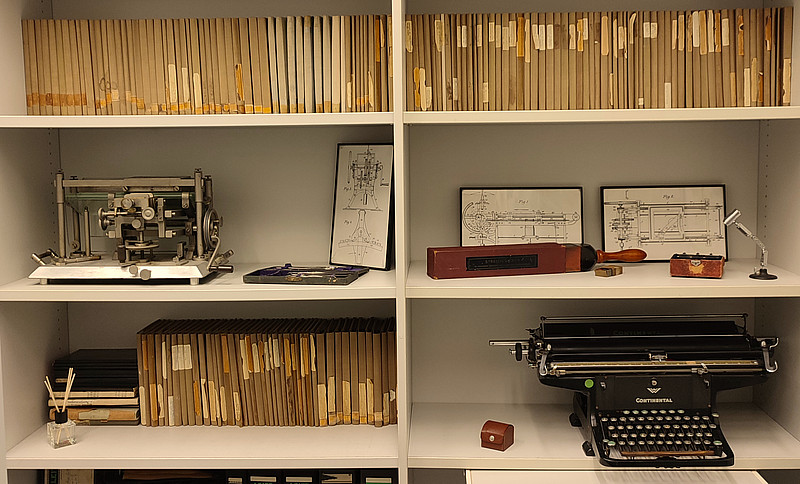
Our C. and O. Vogt Institute of Brain Research hosts the Vogt Collection, the Vogt Archive, as well as several brain section collections. The Vogt Archive comprises a brain and brain section collection as well as the estate of the researcher couple Cécile and Oskar Vogt. The Vogt estate consists of about 70,000 individual pages and includes the institute's files as well as patient records and scientific and private correspondence. In addition, there is a photo archive, a library with about 2,000 book volumes, and a collection of about 20,000 scientific offprints. The collections of Cécile and Oskar Vogt are stored in the Brain Research Institute on about 300 square meters. The Vogt Archive also houses other collections, including those of Dr. Heinz Stephan, Prof. Dr. Dr. Karl Zilles and the current director of our institute, Prof. Dr. Katrin Amunts. The collections are stored in the Institute for Brain Research on over 500 square meters.
The use of the private archive and the collections for scientific purposes is possible after submitting a user request. Please contact our team regarding this. A lead time of four weeks is assumed. The archive is not open to the public.
Inquiries by e-mail to vogt-archiv@uni-duesseldorf.de
Further information and information materials can be found under ‘Booklets & Flyers’ in the sidebar.
30 Years of the Vogt Archive
A new flyer provides insight into the creation and impact of the archive.
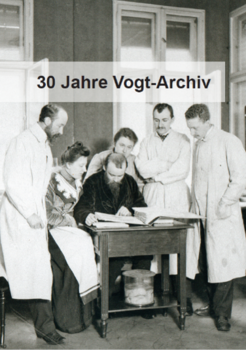
This year marks the 30th anniversary of the opening of the Cécile and Oskar Vogt Archive: On April 29, 1996, Heinrich Heine University Düsseldorf hosted the opening ceremony in the lecture hall of the University and State Library on the university campus. This date marks the key starting point for the public presentation and accessibility of the scientifically cataloged estate of the research couple Cécile and Oskar Vogt, spanning more than six decades of research.
Between 1991 and 1996, Berlin-based physician Ursula Grell carried out the first systematic cataloging of this significant and very extensive estate—comprising some 70,000 sheets—as part of a university project. The heterogeneous collection—largely handwritten and multilingual—was reviewed, classified, cataloged according to the standards of the Marburg School of Archival Studies with the support of subject-matter archivists, and bound. Everything was cataloged, “from the smallest scrap of paper to the neuroanatomical drawing,” as the Rheinische Post reported (newspaper article from April 30, 1996). The various documents from the Vogt estate were thus transformed into a professionally structured archive comprising over 1,200 volumes. In addition, the Vogts’ institute library was reconstructed, and the image archive was cataloged.
You can find more about the development, present, and future of the Vogt Archive here: 30 Years of the Vogt Archive
Save the Date: Nacht der Wissenschaft 2026
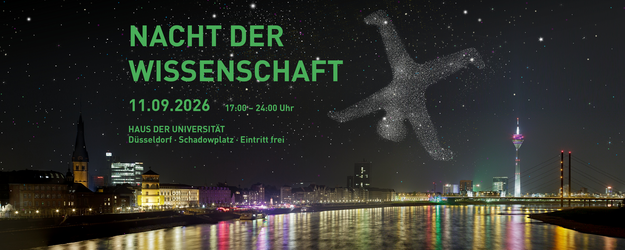
The 6th Düsseldorfer Nacht der Wissenschaft will take place on 11th September 2026 between 5 and 12pm at the Schadowplatz, Haus der Universität, 40212 Düsseldorf.
This year, we are participating with a presentation on the topic “Von der Zeichnung zum digitalen Atlas in der Hirnforschung”. You will find us at the first booth. We are looking forward to your visit.
Please find further information and the programme here: https://www.nachtderwissenschaft-duesseldorf.de/
Visit to the exhibition at the Oskar and Cécile Vogt House in Berlin
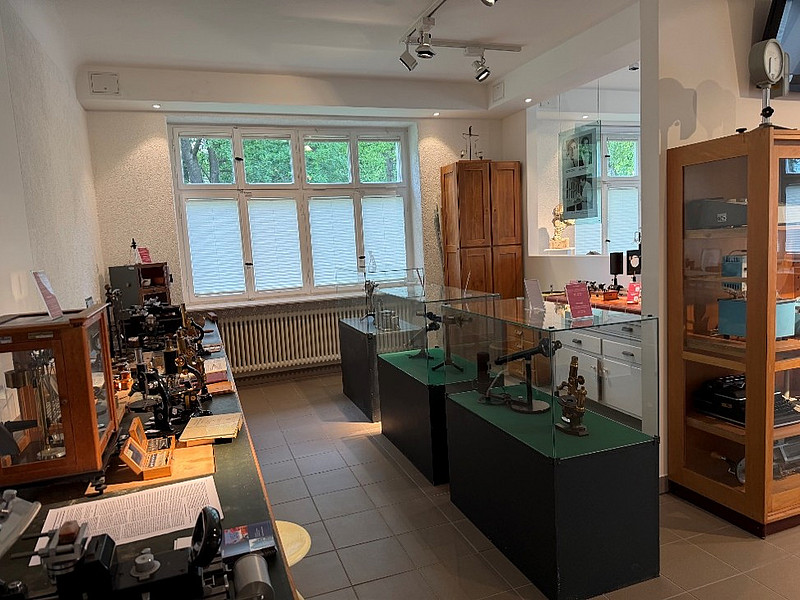
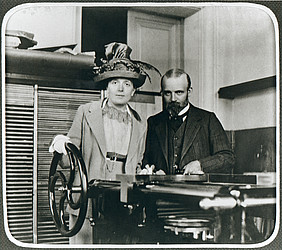
During a visit to Berlin, Institute Director Katrin Amunts and other colleagues were able to visit the Museum of the History of Science in the Cécile and Oskar Vogt House on the campus of what is now the Max Delbrück Center. Through original scientific instruments, as well as textual documents and illustrations, the museum illustrates the history of the former Institute for Brain Research of the Kaiser Wilhelm Society and the subsequent GDR institutes for medicine and biology.
The museum is located in the building of the former Kaiser Wilhelm Institute (KWI) for Brain Research, which was constructed according to Oskar Vogt’s plans and officially opened in 1931. As early as 1934, Vogt was dismissed as director of the KWI under the Nazi Law for the Restoration of the Professional Civil Service. In 1937, Cécile and Oskar Vogt left Berlin for good and founded the Institute for Brain Research and General Biology in Neustadt in the Black Forest. After the deaths of the two founders, the institute relocated in 1965 to the Medical Academy of Düsseldorf, which shortly thereafter became today’s Heinrich Heine University Düsseldorf.
The tour was made possible by Dr. Ulrich Scheller, managing director of Campus Berlin-Buch GmbH. The exhibition also features the workspace of the Soviet geneticist Nikolai Timoféeff-Ressovskij. Oskar Vogt had brought him to Berlin in the 1920s to establish the institute’s experimental genetics department, which focused on studying mutation patterns in fruit flies. Together with physicists Max Delbrück and Karl Günther Zimmer, Nikolai Timoféeff-Ressovskij authored the groundbreaking 1935 paper “On the Nature of Gene Mutation and Gene Structure,” which is considered the founding document of modern molecular biology. Today, this field is a key area of focus at the Max Delbrück Center, which was founded in 1992 in Berlin-Buch following German reunification.
Further information: Max-Delbrück-Centers - Timoféev-Ressovsky
Large turnout for the Night of the Arts: Over 300 guests at the Brain Research Archive
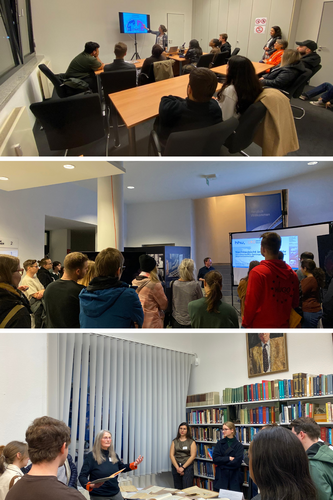
At this year’s Night of the Arts on April 18, the Vogt Archive saw a large turnout—329 Düsseldorf residents took the opportunity between 7 pm and midnight to gain insight into the history of brain research. The program, organized by Caroline Laperrouze, included an exhibition, guided tours held regularly throughout the evening, a workshop, and two lectures. Ursula Grell’s guided tour explained the history and holdings of the archive, which contains the scientific collection and estate of the two researchers Cécile and Oskar Vogt. In the workshop “Fundamentals of the Brain: Structure, Function, and Clinical Significance” Dr. Evelyn Oermann provided an interactive introduction to the anatomy of the brain. Dr. Felix Ströckens’ lecture “Night Shift in the Brain Archive: From Historical Brain Specimens to Modern Neuroscience” linked the collection to questions of contemporary science. Other colleagues from the C. and O. Vogt Institute for Brain Research were on site to provide support in various ways. Another contribution to the program came from Dr. Luisa Rittershaus and Ulrich Koppitz of the Düsseldorf Institute for the History and Ethics of Medicine. They spoke about the art collection “Man and Death” curated there, which comprises over 6,000 original graphic works. In a presentation, Rittershaus, as curator of the collection, showcased a selection specifically focused on the theme of the brain. We would like to thank all our supporters and guests!
A group from the German Academic Scholarship Foundation visited the Vogt Archive
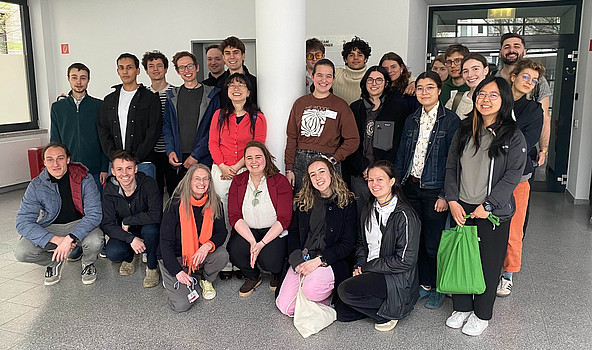
On March 24, the Vogt Archive welcomed visitors from the Life Sciences College of the German Academic Scholarship Foundation. The Foundation supports undergraduate and graduate students across all disciplines and organizes two-year interdisciplinary colleges within its subject groups. The visit marked the start of a college on the topic “Between Noise and Rhythm—Patterns and Emergence in Neural Networks” . Under the guidance of the two course instructors, Prof. Yujiang Wang (Newcastle University) and Dr. Richard Rosch (King’s College London), participants from diverse fields—ranging from medicine and physics to the humanities—are collaborating on the topic, with work phases at various locations and field trips forming part of the program. For the Vogt Archive, Ursula Grell and Caroline Laperrouze provided introductions to the extensive document collection and the scientific collection of Cécile and Oskar Vogt, which is housed in Düsseldorf. The group also visited the Institute of Neuroscience and Medicine at the Jülich Research Center.
The Vogt Archive at Brain Awareness Week in Düsseldorf
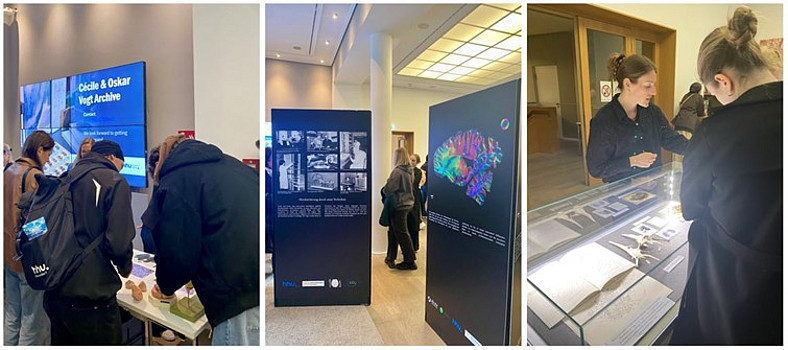
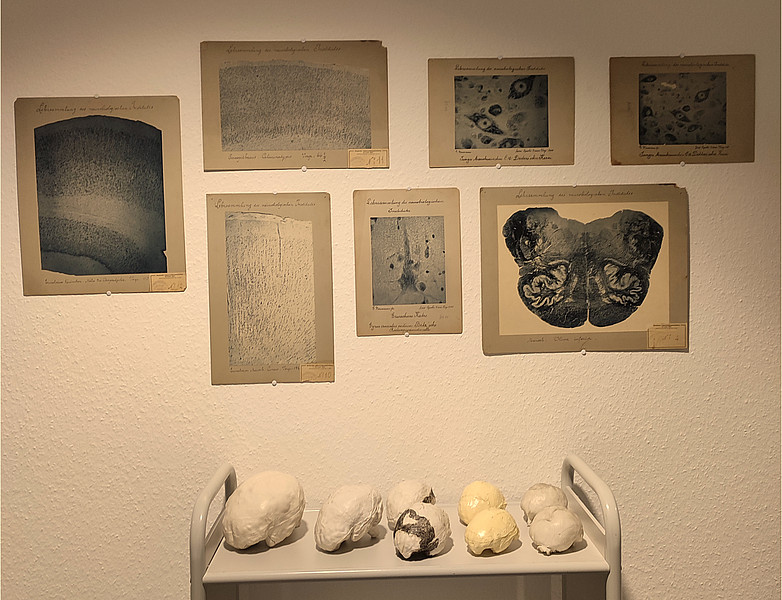
As part of this year’s Brain Awareness Week, a small exhibition organized by the Vogt Archive and the Cécile and Oskar Vogt Institute on March 17 showcased more than 100 years of evolving brain research. At the University House in Düsseldorf, historical exhibits and photos were presented, offering a glimpse into the early days of modern brain research from the beginning of the 20th century. These were contrasted with the colorful, three-dimensional atlases of contemporary brain mapping.
During the well-attended exhibition, staff from the Archives and the Institute were on hand to answer questions. Brain Awareness Week, a global initiative aimed at raising awareness about brain research, takes place every March. It is organized by the Dana Foundation and the Federation of European Neuroscience Societies (FENS).
Exhibition Announcement: Benno Reifenberg in the 'Castle of Brains' of the Vogts
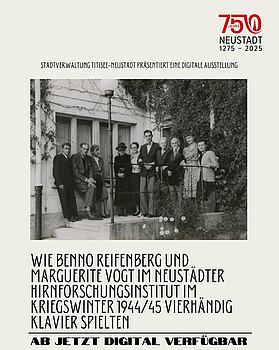
We are pleased to draw your attention to the virtual exhibition: ‘Beethoven Against Hunger, Bruckner Against the Cold. How Benno Reifenberg and Marguerite Vogt Played Four-Hand Piano at the Brain Research Institute in Neustadt During the War Winter of 1944/45.’
The exhibition tells the story of how the feuilleton journalist Benno Reifenberg found refuge at the institute of Cécile and Oskar Vogt in Neustadt in 1944/45. The Institute of Brain Research and General Biology had been established by the Vogts after they were forced to leave Berlin in 1937 under pressure from the National Socialists. Known by local residents as ‘he Castle of Brains’, the institute relocated in 1965 to the newly founded University of Düsseldorf, becoming the predecessor of today’s Cécile and Oskar Vogt Institute of Brain Research at the University Hospital Düsseldorf.
As managing editor of the Frankfurter Zeitung, Benno Reifenberg was among the most prominent liberal journalists of the Weimar Republic. After the newspaper was banned in 1943, he worked in the brain researchers’ laboratory together with Vogts’ daughter Marguerite, with whom he gave evening four-hand piano performances. The remote institute in the Black Forest is described by the exhibition’s curators as a ‘unique intellectual biotope’. Former staff members such as Igor Klatzo also recalled its special atmosphere, describing it as a ‘magic mountain’. After the war, Reifenberg founded Die Gegenwart in 1945, which became the most widely read magazine until the establishment of the early Federal Republic of Germany, and in 1959 he became a co-publisher of the Frankfurter Allgemeine Zeitung (FAZ). He reflected on his time in Neustadt in his book ‘Oskar Vogt – My Confrontation with Natural Science’.
The exhibition is part of the German Digital Library’s offerings and was created in 2025 as part of Neustadt’s anniversary year.
The Julich Brain Atlas and the “Telematic Society”
“Between Image and Language – Thinking in the Telematic Society” is the title of the lecture by Professor Katrin Amunts on Tuesday, November 25, 2025, at the North Rhine-Westphalian Academy of Sciences, Humanities and the Arts in Düsseldorf. The background is the utopia of a “telematic society,” conceived by media philosopher Vilém Flusser more than forty years ago. In such a society, human and technical communication systems are inseparably intertwined. According to this utopian vision, a world so thoroughly digitalized would itself digitalize human thought and radically transform the symbols of human exchange.
The event begins at 6:30 p.m. at the Academy’s headquarters, Palmenstraße 16, 40217 Düsseldorf. Registration: anmeldung@awk.nrw.de .
Please find further information on their website.
Why two pioneers of brain research never received the Nobel Prize
A new article in Frontiers in Neuroanatomy examines the scientific legacy of Cécile and Oskar Vogt. Their joint work shaped modern brain research—yet they never received the Nobel Prize, despite numerous nominations. Authors Nils Hansson, Heiner Fangerau, Fabio De Sio, Ursula Grell, and Katrin Amunts draw on archival sources from the Nobel Forum in Sweden and the Vogt Archive in Düsseldorf to understand why the research couple was nominated repeatedly over decades, yet the Nobel Prize Committee always decided otherwise. The article also reflects on how the Vogts' work lives on in modern neuroscience. The article was written in collaboration with researchers from the C. u. O. Vogt Institute for Brain Research, the Vogt Archive, and the Institute for the History, Theory, and Ethics of Medicine at Düsseldorf University Hospital.
https://www.frontiersin.org/journals/neuroanatomy/articles/10.3389/fnana.2025.1679993/full
Nils Hansson, Heiner Fangerau, Fabio De Sio, Ursula Grell and Katrin Amunts (2025). Pioneers of modern brain research—Cécile and Oskar Vogt and the Nobel Prize. Front. Neuroanat. 19:1679993. doi: https://doi.org/10.3389/fnana.2025.1679993
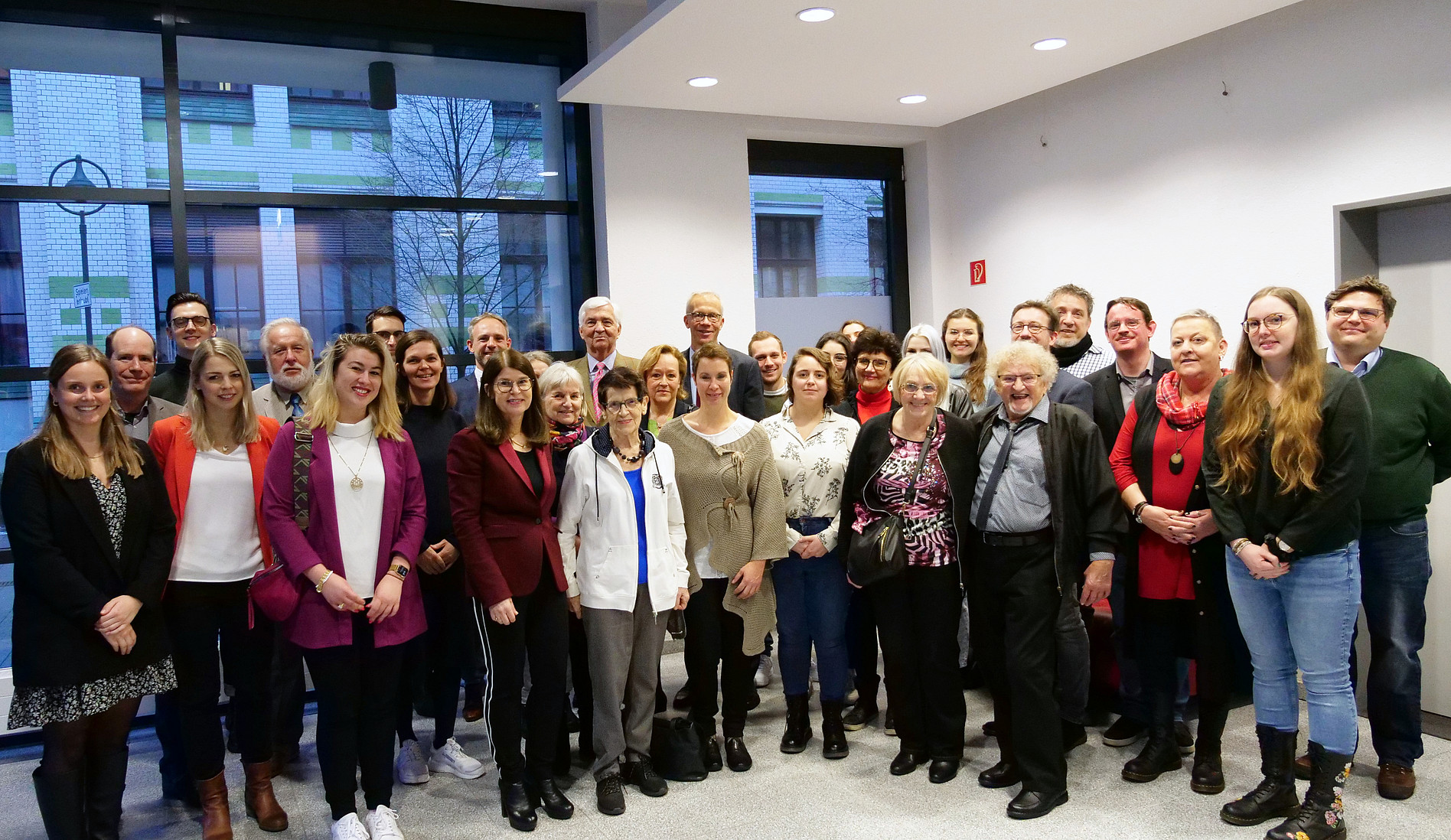
Reception in the new Vogt Archive
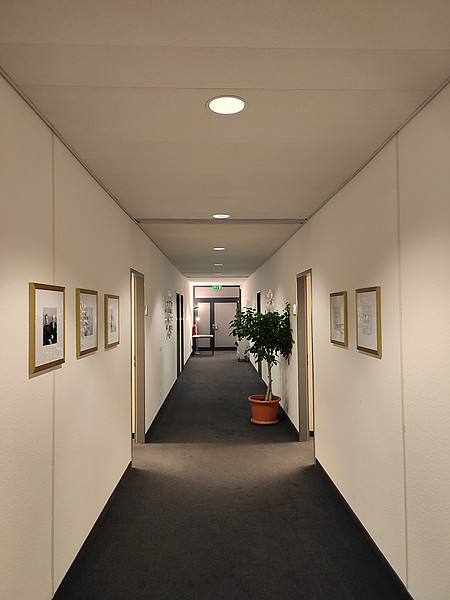
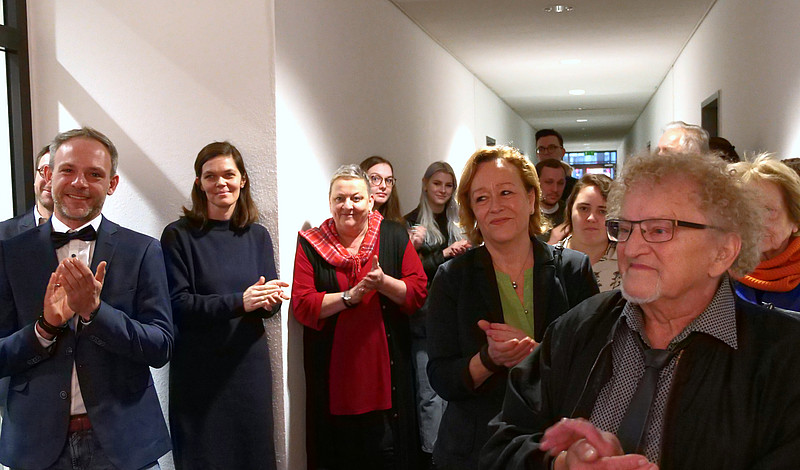
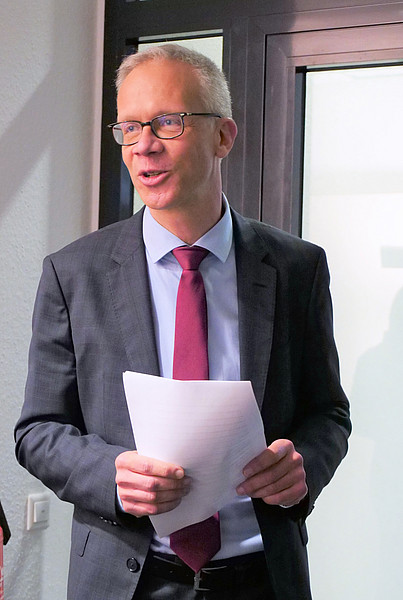
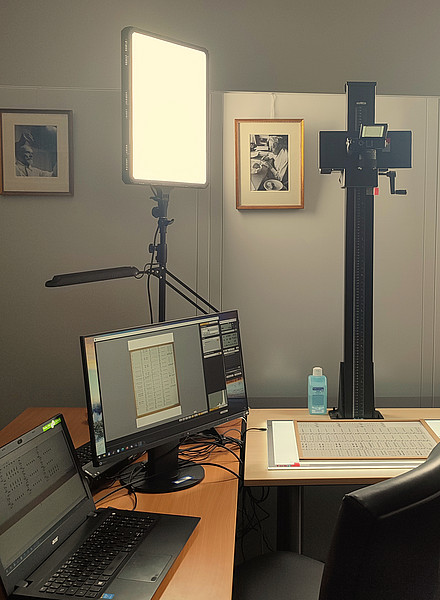
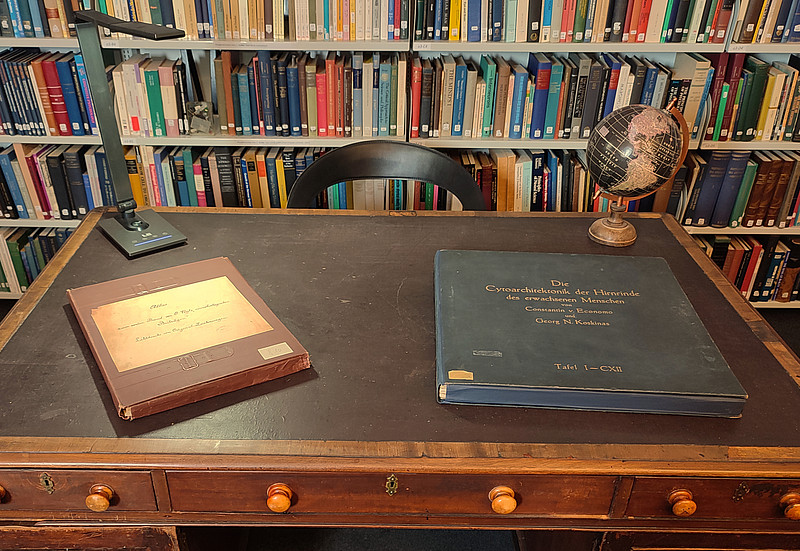
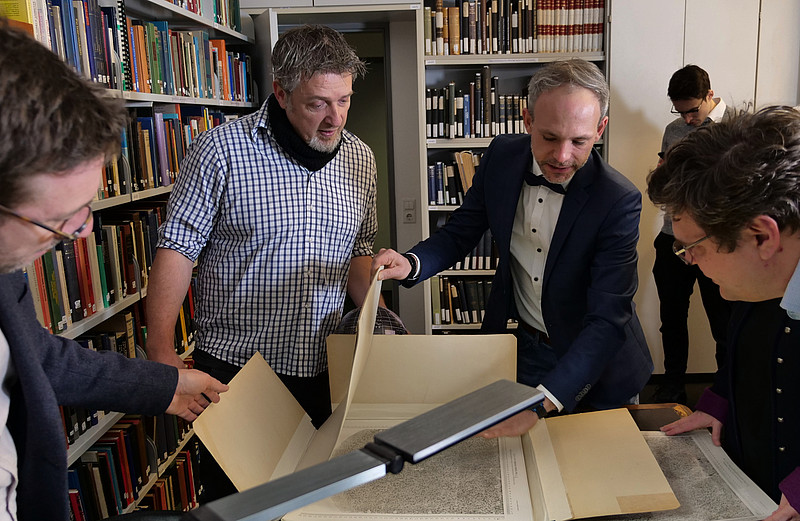
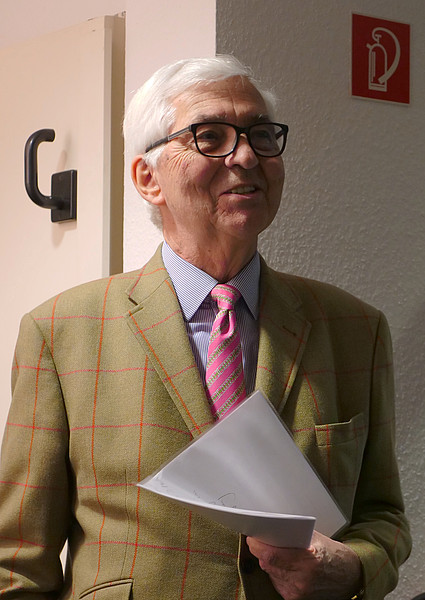
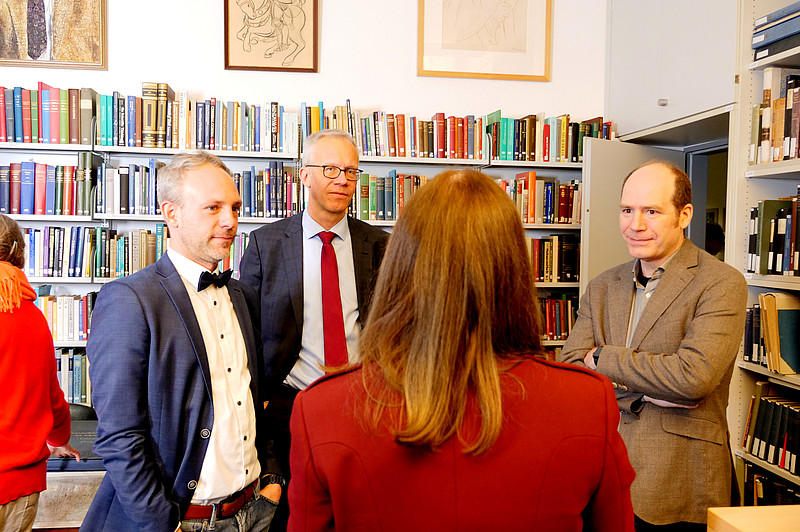
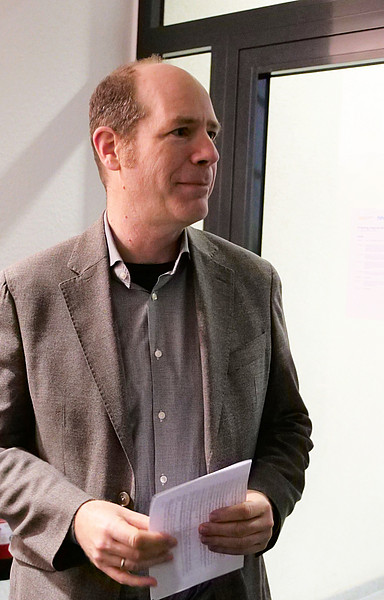
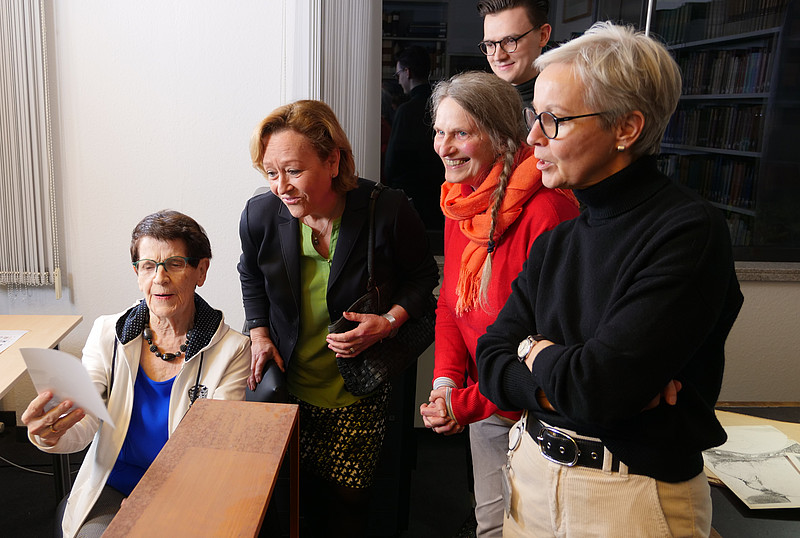
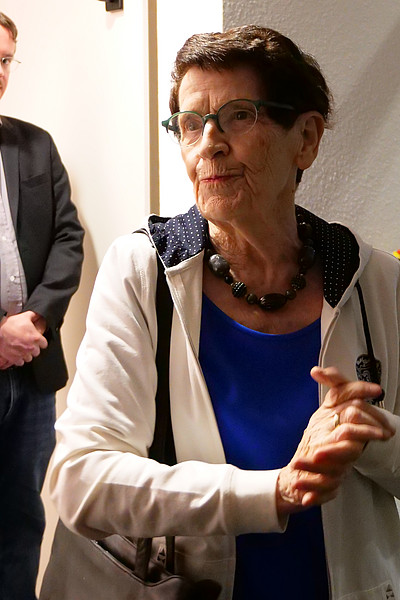
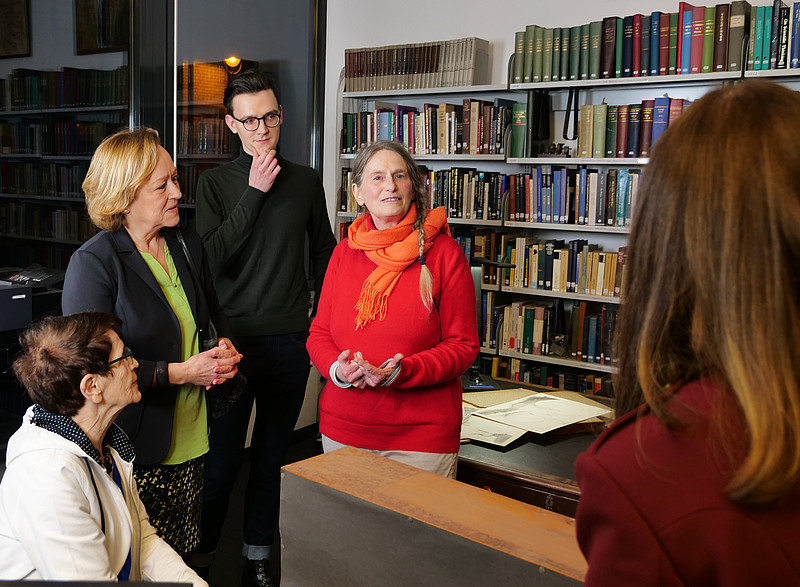
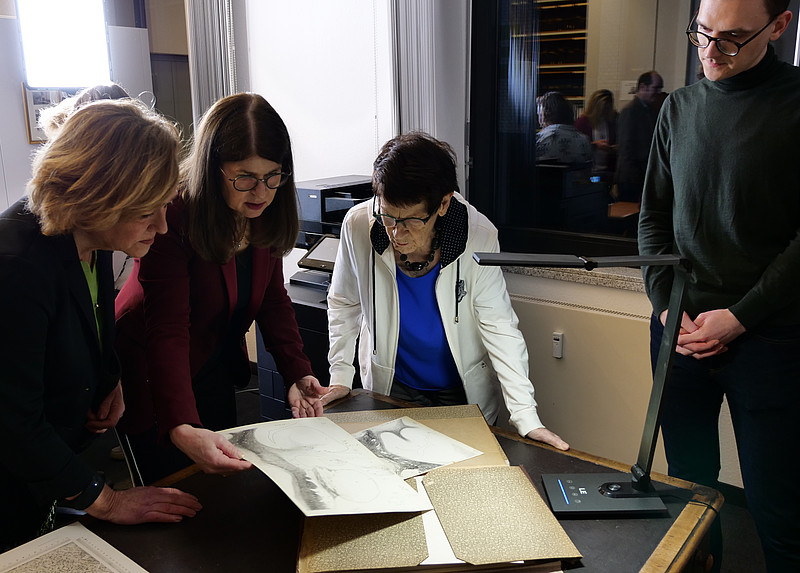
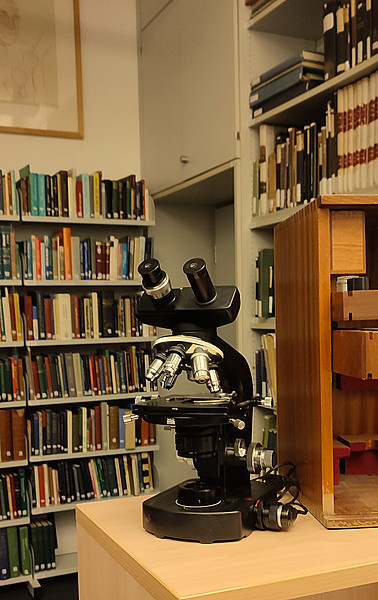
For the reception in the new Vogt Archive in the Himmelgeisterstraße on the 10th of January 2023, employees of the C.&O. Vogt Institute of Brain Research, representatives of the Medical Faculty, the Institute of the History, Philosophy and Ethics of Medicine, the Gesellschaft von Freunden und Förderern der Heinrich-Heine-Universität e.V as well as the members of the Board of Trustees and donors of the Cécile and Oskar Vogt Foundation came together. It was the kick-off for the digitization and relocation project of the estate and brain section collection of the research couple Cécile and Oskar Vogt. Many thanks to all participants who made this evening an impressive event. Especially to our speakers for their warm greetings, in particular to our Institute Director Prof. Dr. Amunts, to Prof. Dr. Nikolai Klöcker, Dean of the Medical Faculty, to Prof. Dr. Heiner Fangerau, Vice Dean for Strategic Development, to Mr. Eduard Dörrenberg, President of the Gesellschaft von Freunden und Förderern der Heinrich-Heine-Universität e.V. (GFFU) and to our guest of honor Prof. Dr. Rita Süssmuth. In the upcoming months, the Vogt Collection will be successively moved to its new location, digitized. Thus much easier access to this historical research material will be provided. It will help to complete our brain mapping and integrate the research results of more than six decades from the late 19th century into the modern brain atlases of the 21st century.
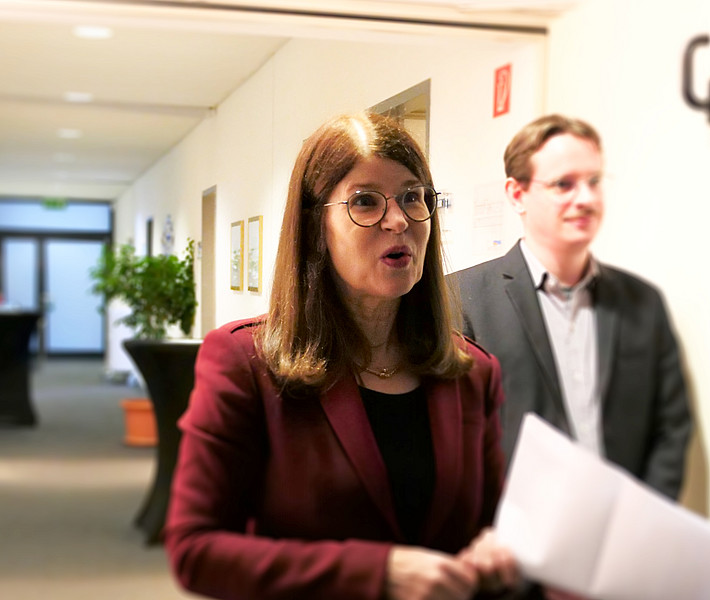

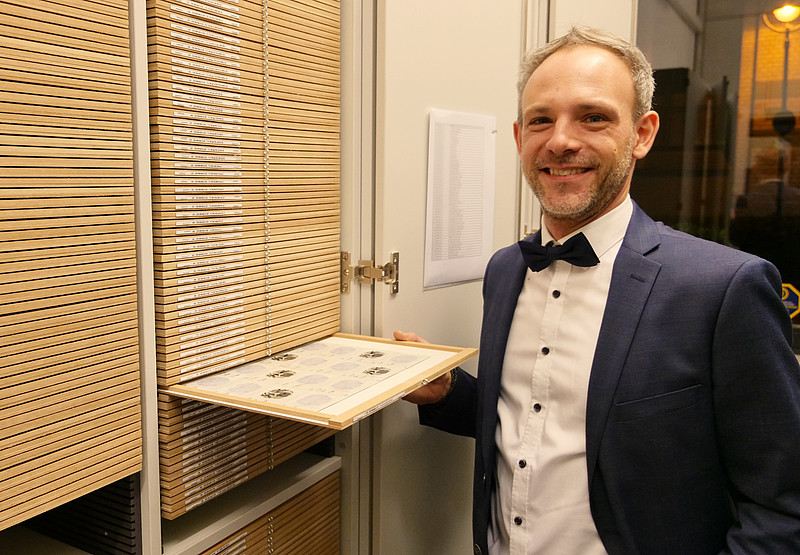
Unique brain collection to be digitized: Kick-off at the Cécile and Oskar Vogt Archive
Oskar and Cécile Vogt were early pioneers in mapping the brain. In the six decades of their work, they made significant contributions to the understanding of brain organization and to the development of brain research as a science. The C.&O. Vogt Archive contains the extensive estate of the research couple.
To mark the start of the digitization and relocation of the Vogt Archive, brain researcher and institute director Prof. Katrin Amunts invites to a kick-off meeting in the new building in Düsseldorf's Himmelgeisterstraße. Invited are the staff of the C.&O. Vogt Institute of Brain Research, representatives of the Medical Faculty and the Institute of History, Philiosophy and Ethics of Medicine, as well as the Gesellschaft von Freunden und Förderern der Heinrich-Heine-Universität e.V., and the members of the Board of Trustees and donors of the Cécile and Oskar Vogt Foundation.
The Cécile and Oskar Vogt Institute of Brain Research at UKD and HHU is in the tradition of the research conducted by the Vogts and focuses on the question of the basic organizational principles and functions of the human brain, in particular the cerebral cortex and its dependence on various internal and external influences.
Date:
Tuesday, January 10, 2023 at 4 PM
Location: Himmelgeister Straße 103-105 in 40225 Düsseldorf
Contact: Caroline Laperrouze, scientific archivist (calap101@hhu.de)