



Laboratory and Institutional Infrastructure
The institute's laboratories and technical facilities form the basis of all research, diagnostic and training activities in Asella. They cover the range from routine clinical diagnostics to real-time pathogen genome sequencing and are available to partner institutions for joint projects.
Core capabilities at a glance:
- State-of-the-art Microbiology
- Serology and Clinical Chemistry (e. g., COBAS e411)
- Real time PCR (QIAGEN Rotor-Gene Q system)
- GeneXpert System
- Oxford Nanopore Sequencing
- Transport capacity for field work
- Data management team
- Administration and financial management unit
- Telemedicine facilities
- Bioreposatory -80°C with generator back-up
Molecular diagnostics:
At the core of GHIDA is its state-of-the-art molecular diagnostics laboratory equipped with advanced technologies, including:
- Real time PCR (QIAGEN Rotor-Gene Q system)
- GeneXpert System
- Oxford Nanopore Sequencing
- Gel Electrophoresis
These platforms enable the sensitive detection and molecular characterization of viral, parasitic, and bacterial pathogens. A particular research focus is on the development and evaluation of innovative diagnostic methods for rapid pathogen identification and the detection of antimicrobial resistance mechanisms. In this way, GHIDA contributes to improving patient care and strengthening infectious disease diagnostics in resource-limited health care systems.
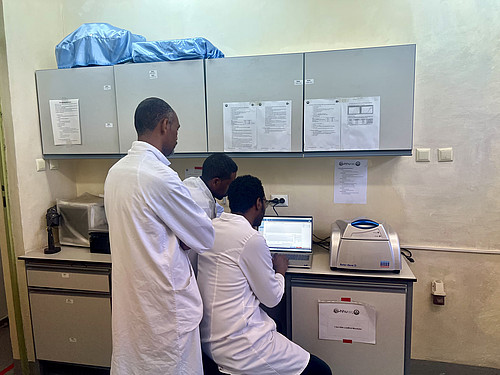
Next-Generation Sequencing (NGS) Platform
GHIDA operates a state-of-the-art NGS platform based on Oxford Nanopore technology. This versatile infrastructure enables real-time genomic analysis and lays the foundation for precision diagnostics, molecular surveillance, and innovative research in the field of infectious diseases.
Key areas of application include:
- Real-time whole-genome sequencing of viral, bacterial, and parasitic pathogens
- Rapid outbreak investigation and transmission tracking (Pandemic Preparedness)
- Amplicon sequencing for targeted genomic regions (e.g., HIV drug resistance mutations, AMR markers)
- Metagenomic and cell-free DNA sequencing
- Portable sequencing workflows for field and low-resource settings
- Bioinformatics pipelines for genome assembly, variant analysis and phylogenetics
This platform positions GHIDA as a regional center for genomic surveillance, advanced infectious disease diagnostics, and the rapid investigation of outbreaks. At the same time, the platform serves as the foundation for international research collaborations and the development of local expertise in the fields of genomics and bioinformatics.
Clinical Microbiology Laboratory
The clinical microbiology laboratory includes a BAC/ALERT automated blood culture system for the detection of bloodstream infections and high-quality bacterial isolation. It also provides antimicrobial resistance profiling to guide targeted therapy.
Parasitology Unit
The parasitology unit offers state-of-the-art diagnostic methods for detecting parasitic infections. In addition to in vitro cultures of Plasmodium falciparum, the department uses microscopic and molecular methods, as well as established concentration and staining techniques, including those for detecting Cryptosporidium spp.
Hematology and Clinical Chemistry
GHIDA provides comprehensive hematological and clinical chemistry testing to support clinical decision-making, research activities, and patient monitoring. These diagnostic capabilities enable the assessment of organ function, detection and characterization of disease processes, and evaluation of treatment response over time.
Immunology and Hormonal Diagnostics
The Roche COBAS e 411 Analyzer performs automated immunoassays for the measurement of hormones, markers of infection, and immunological parameters. The platform supports both clinical diagnostics and scientific research projects.
Telemedicine
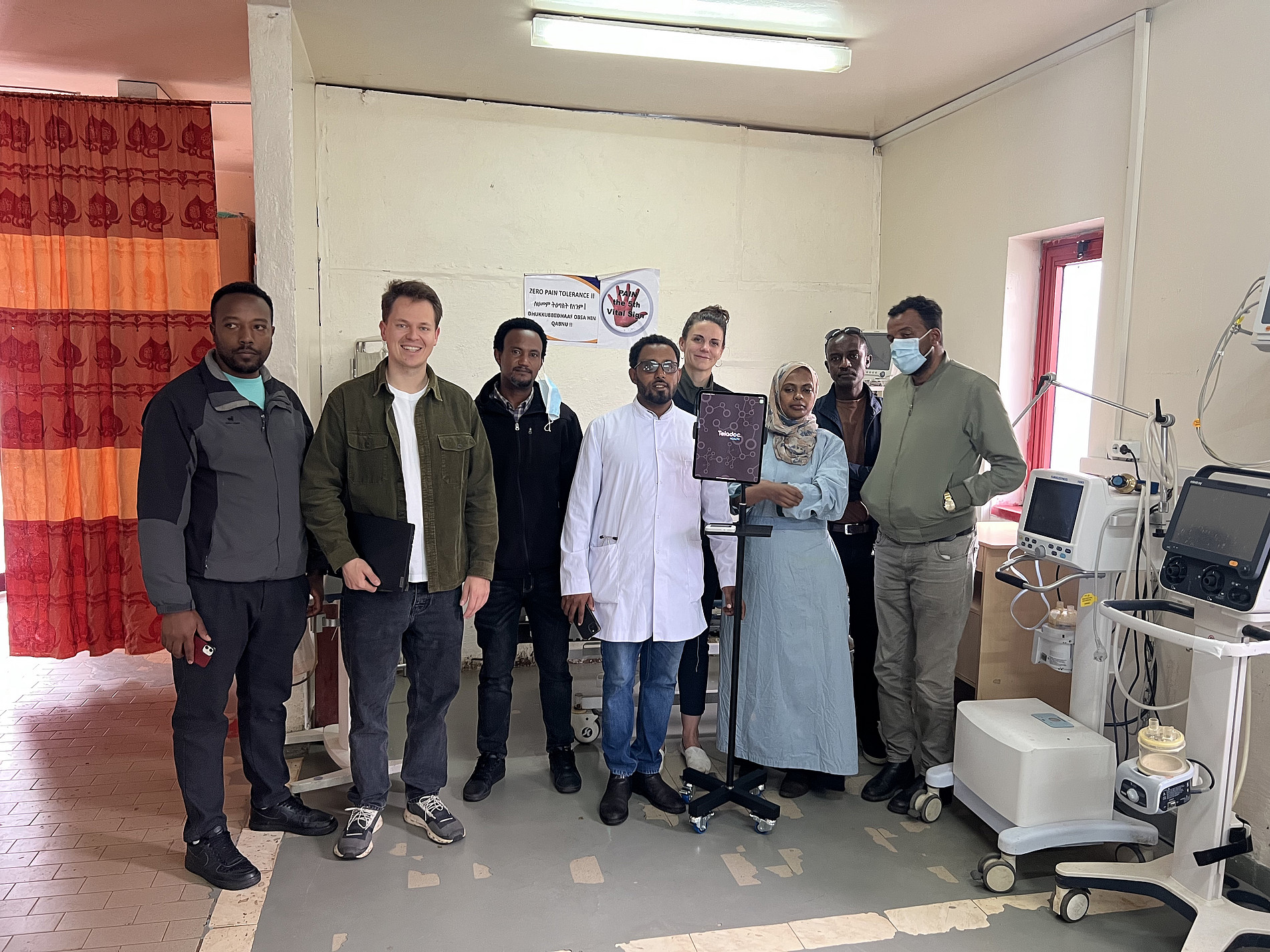
As part of the STAIRS project, a telemedicine infrastructure was established in Asella and Addis Ababa through close collaboration between GHIDA and Charité Berlin. In July 2025, Dr. Wiltrud Abels of Charité Berlin, together with the GHIDA team, carried out the first implementation phase of the telemedicine infrastructure. This involved establishing the technical requirements, including the installation of iPads and mobile telemedicine workstations. At the same time, training sessions were held for medical staff in the intensive care and emergency departments of the Asella Referral and Teaching Hospital, as well as in the intensive care unit at St. Paul’s Hospital in Addis Ababa.
Following the full deployment of the technical equipment in August 2025, a second training phase was conducted by the GHIDA team, along with the first practical testing of the telemedicine connection and clinical collaboration with Charité Berlin.
The platform enables regional hospitals to seek specialist medical support at an early stage, for example in the fields of critical care medicine, infectious diseases, and antibiotic stewardship (ABS). This allows for improved treatment decisions, more targeted coordination of patient transfers, and a sustainable strengthening of care for critically ill patients.
Overall impact
Using state-of-the-art diagnostics, innovative sequencing technologies, and an interdisciplinary team, GHIDA brings together clinical care, research, and education under one roof. In this way, the institute strengthens sustainable local capacity, improves patient care, and makes an important contribution to international research in the field of global health.